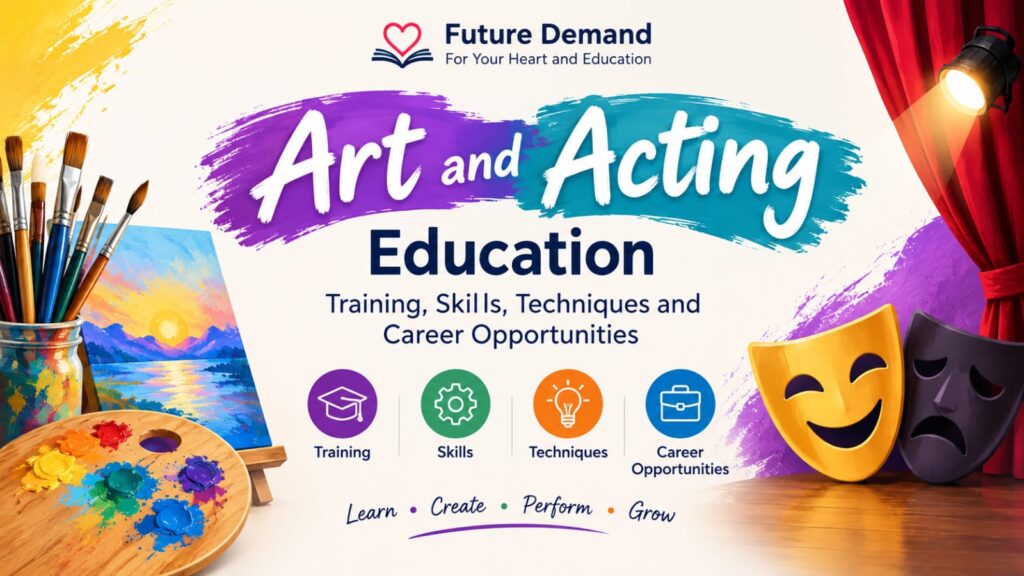
Art and Acting Education: Training, Skills, Techniques, and Career Opportunities
Introduction
Art and acting are powerful forms of self-expression that allow individuals to communicate emotions, ideas, and stories in unique and meaningful ways. Whether you dream of becoming a professional actor, a visual artist, or simply want to develop your creative abilities, proper education and training can help you build a strong foundation. In today’s creative industry, artistic and acting skills are valued not only in entertainment but also in education, marketing, content creation, and many other fields.
This guide explores the importance of art and acting education, essential skills, effective training techniques, and the exciting career opportunities available for aspiring creatives.
Why Art and Acting Education Matters
Education in art and acting provides more than technical knowledge. It helps individuals develop confidence, creativity, communication skills, and emotional intelligence. Through structured learning, students gain a deeper understanding of artistic principles, performance techniques, and industry standards.
Benefits of art and acting education include:
- Improved creativity and imagination
- Enhanced communication and presentation skills
- Better emotional expression and understanding
- Increased self-confidence
- Stronger problem-solving abilities
- Opportunities for personal and professional growth
Whether learning through formal education, workshops, online courses, or self-study, continuous learning plays a vital role in artistic success.
Essential Skills for Artists and Actors
- Creativity
Creativity is the foundation of both art and acting. Artists use creativity to produce original works, while actors use it to bring characters and stories to life.
- Observation Skills
Successful artists and actors carefully observe people, emotions, movements, and surroundings. Observation helps create realistic performances and compelling artwork.
- Communication
Actors communicate through dialogue, facial expressions, and body language. Artists communicate through colors, shapes, and visual storytelling.
- Discipline and Practice
Consistent practice is essential for mastering any creative skill. Daily exercises help improve technique and build confidence.
- Emotional Intelligence
Understanding emotions allows actors to portray characters authentically and helps artists create work that resonates with audiences.
- Adaptability
Creative professionals often face new challenges and changing trends. Adaptability helps them stay relevant and continue growing.
Effective Acting Training Techniques
Voice Training
A strong voice is crucial for effective performance. Voice training helps actors improve clarity, projection, pronunciation, and emotional delivery.
Common exercises include:
- Breathing techniques
- Vocal warm-ups
- Tongue twisters
- Reading scripts aloud
Body Language Training
Actors communicate as much with their bodies as they do with words. Learning posture, movement, gestures, and facial expressions helps create believable characters.
Character Development
Understanding a character’s background, motivations, and personality helps actors deliver authentic performances.
Practice methods include:
- Character analysis
- Improvisation exercises
- Scene study
- Role-playing activities
Improvisation
Improvisation develops spontaneity, creativity, and confidence. It teaches actors to respond naturally in unexpected situations.
Script Analysis
Studying scripts helps actors understand story structure, character relationships, and emotional arcs.
Art Training Techniques
Drawing Fundamentals
Drawing is one of the most important skills for visual artists. Learning perspective, proportions, shading, and composition builds a strong artistic foundation.
Color Theory
Understanding color relationships helps artists create visually appealing and emotionally impactful artwork.
Composition
Composition ref